
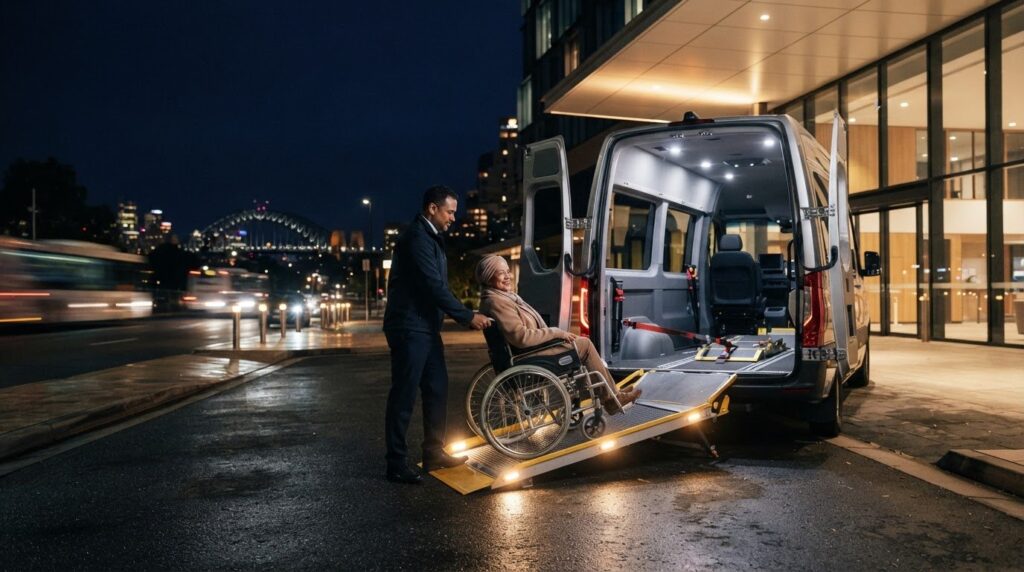
A medical appointment transfer works best when the vehicle and boarding plan suit the passenger. For wheelchair accessible transfers in Sydney, pre-booking helps plan around wheelchair dimensions, passenger numbers, luggage, journey distance and pickup location. Drivers secure the wheelchair with the vehicle’s restraint system before departure.
Getting to a hospital or specialist appointment involves more than travelling from A to B. You may also need to plan how boarding will work, whether the wheelchair will fit and what assistance is needed along the way.
This guide explains what to share when arranging a transfer, how vehicle suitability is assessed, and what to expect during boarding and wheelchair securement. You’ll also learn how to plan medical appointment transport around your pickup and destination, so you can make practical arrangements with greater peace of mind.
Key Takeaways
- Pre-book medical travel and share your pickup location, destination and passenger requirements so the journey can be planned around your needs.
- Tell the transport provider your wheelchair type, approximate dimensions and weight, and whether it folds.
- Discuss boarding assistance and wheelchair securement before travel so you know what to expect when getting into the vehicle.
- For a medical appointment transfer, provide the appointment details and any relevant travel requirements when arranging your booking.
Why Choose Accessible Wheelchair Transport Sydney?
Pre-booked wheelchair accessible transfers in Sydney can be planned around your pickup suburb and destination. Planning ahead helps with medical visits, airport journeys and recurring travel across New South Wales.
Available Transfer Services Across Sydney
Pre-booked wheelchair-accessible transport operates across Sydney, including the CBD and Sydney Airport. Wheelchair-accessible taxi bookings are another option to arrange for trips within the city and suburbs. Give the exact pickup and destination locations when booking, since suburb names alone may not identify the entrance or collection point you need.
A transfer can cover a one-off trip or planned travel to a hospital, specialist appointment or family event. Describe the journey and passenger requirements clearly, distinguishing a medical-centre drop-off from an airport pickup or another destination with a specific collection point.
Comparing Transport Options
Public transport follows set routes and stops, while a pre-booked transfer is arranged between selected locations. Community transport has its own booking arrangements and service scope. Compare options against your appointment time, route and required pickup point. A direct transfer may suit a specialist visit with a specific arrival time; public or community transport may work for other journeys.
Choose based on the whole trip, not just the distance between addresses. Consider how each option connects your starting point to the destination entrance and whether its timetable fits your plans. For a medical appointment, a pre-arranged pickup can make it easier to coordinate the journey with the day’s schedule.
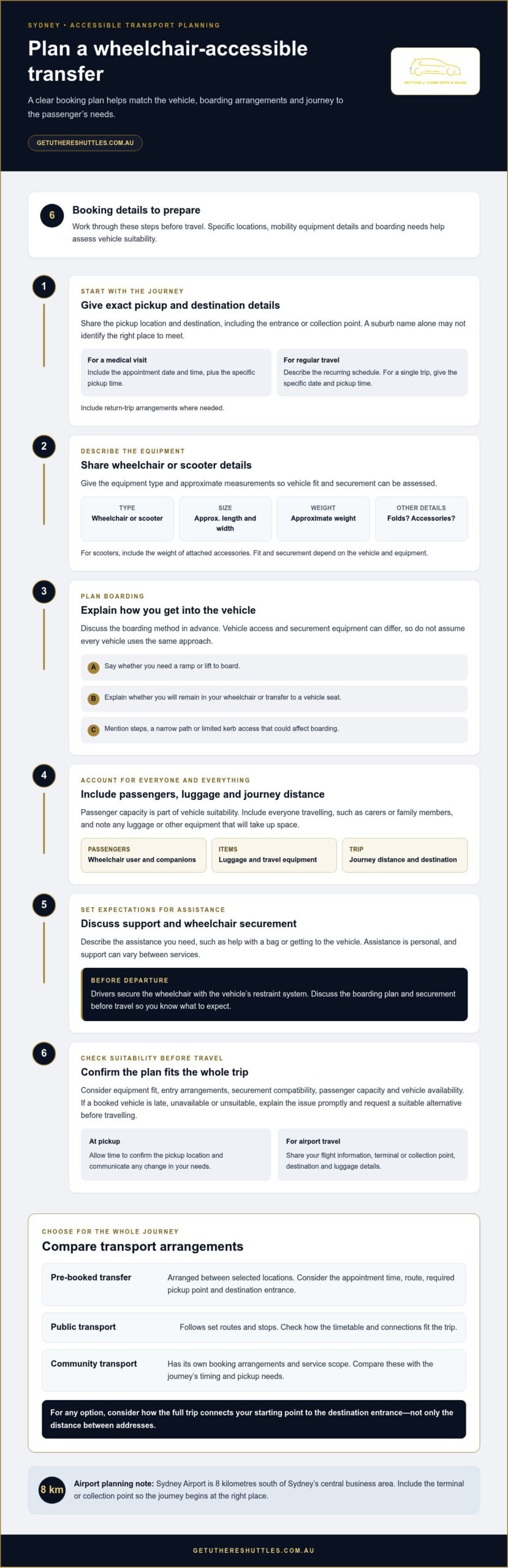
Book ahead for hospital appointments, specialist visits, regular NDIS transport and important family events. Provide the pickup suburb, destination, appointment time and passenger numbers. Include luggage and journey distance to help plan the trip. For regular visits, describe the recurring schedule; for a single appointment, give the specific date and pickup time.
For wheelchair accessible transfers in Sydney to or from the airport, share your flight information, pickup point and destination. Sydney Airport is 8 kilometres south of Sydney’s central business area. Include the airport terminal or collection point and any luggage details in your booking, so the itinerary clearly identifies where the journey begins.
Safe boarding, wheelchair securement and driver assistance
A well-planned pickup starts with clear information about access needs. Tell the booking service where the vehicle should stop and whether steps, a narrow path or limited kerb access could affect boarding. At a hospital, give the entrance or pickup zone, not just the street address. This helps the driver locate you and plan for the pickup.
Before departure, drivers secure the wheelchair using the vehicle’s restraint system. Explain how you prefer to board and what assistance you need. If you transfer from your wheelchair to a vehicle seat, mention this when booking. If you remain in your wheelchair, share its type and relevant dimensions so the vehicle can be matched to your needs.
Assistance is personal. A companion may be travelling with you, or you may need help with a bag or getting to the vehicle. Describe these needs in advance, rather than assuming every taxi service provides the same support. For a wheelchair taxi service, discuss the pickup point and boarding plan so expectations are clear before the trip begins.
Driver training and certification are separate from vehicle suitability. The term “wheelchair accessible” does not identify a particular qualification. If driver assistance is central to your journey, describe the support you need when arranging transport. For a scooter, provide its type and dimensions, since fit and securement depend on the vehicle and equipment.
On arrival, allow time to confirm the pickup location and communicate any change in your needs. A clear plan supports an orderly boarding process and helps avoid rushed decisions. For travel to appointments, include the destination entrance and any return-trip arrangements in your booking. If you need transport for a medical visit, explore medical appointment transfers as one option for planning the journey.
Wheelchair vehicle suitability and equipment dimensions
A suitable vehicle must fit the wheelchair, passenger and trip requirements. If your booked vehicle is late, unavailable or unsuitable, contact the booking service promptly. Explain the issue, such as insufficient space or incompatible securement, and request a suitable alternative before travelling.
When arranging accessible transport, describe your equipment rather than relying on its general category. Provide the wheelchair type, approximate length and width, weight, and whether it folds. These details help assess vehicle fit and distinguish a compact folding chair from a larger powered wheelchair.
Entry arrangements matter too. Explain whether you need a ramp or lift to board, and whether you’ll remain seated in your wheelchair during the journey. Vehicle access and securement compatibility affect suitability. Don’t assume every accessible vehicle uses the same equipment or boarding method.
Mobility scooters need their own fit assessment. Vehicle suitability depends on the scooter’s dimensions, combined weight, securement compatibility and vehicle availability. Share the scooter’s measurements and weight, including any attached accessories. This gives the booking service useful information to plan your journey.
Passenger capacity is another part of vehicle suitability. Carers, family members and other passengers may travel with a wheelchair user, depending on the vehicle’s capacity. Include everyone travelling when booking. For a medical trip, also account for luggage or equipment that will take up vehicle space.
Before confirming a booking in Sydney, summarise your needs: wheelchair or scooter type, measurements, weight, boarding method, passenger numbers and destination. A clear list helps assess whether the vehicle can accommodate both the equipment and everyone travelling. If your mobility equipment changes before pickup, update the booking details promptly.
Hospital and medical appointment transport
Medical travel can involve a fixed appointment time, a particular hospital entrance and a return journey. For passengers with disability or limited mobility, plan the full itinerary, not just the drive there. A specialist visit in central Sydney may have a different pickup point from a suburban clinic. Give both addresses when arranging transport.
Share the appointment time, pickup address and destination entrance when booking. Explain whether a companion is travelling and whether you need a return trip. If you have multiple appointments, list each stop in order. These details help plan transport around your schedule and the journey across Sydney.
- For a hospital visit, name the building or entrance where you need to be dropped off.
- For a clinic appointment, provide the street address and any useful pickup instructions.
- For a return journey, include the planned pickup location after your appointment.
- For several stops, give each destination and the order you intend to visit them.
Wheelchair taxis can support travel between home, medical centres and hospitals, while public transport may involve separate connections. Choose based on your route, appointment time, mobility needs and preferred boarding arrangements. If a passenger is travelling from Sydney Airport to a medical appointment, include the airport pickup point and clinic destination in the itinerary. That makes the full journey clear from the outset.
For recurring appointments, provide the regular pickup and destination details for each trip. For a one-off visit, focus on that day’s schedule, entrance and return arrangements. If the appointment time or destination changes, update the booking promptly. Clear, current details help keep the planned journey aligned with the medical visit.
Arrange a medical appointment transfer by sharing your pickup and destination, appointment time, passenger details and any travel requirements. This information helps tailor the booking to the journey you need.
Get U There Shuttles: Airport Transfers
Get U There Shuttles provides Airport Transfers and medical appointment transfers across Sydney and New South Wales. To request a quote, share your pickup and destination, travel date and time, passenger numbers, wheelchair details and assistance requirements. This information helps tailor the transport plan to your journey.
Complete the enquiry form and Get U There Shuttles will be in touch within 24 hours with a quote. For urgent bookings or help completing the form, call 1300 66 88 48.
Contact Get U There Shuttles to discuss your transport requirements.
Plan your next trip with confidence
Make your next journey easier to organise by including transport in the appointment plan. When arranging wheelchair accessible transfers in Sydney, consider what will help the passenger feel prepared from pickup to arrival, including who will travel with them and any assistance preferences. A clear plan can also help family members coordinate their schedules.
Get U There Shuttles also provides Cruise Ship Transfers and worker’s compensation transportation across Sydney and New South Wales. To request a quote, share your pickup and destination, travel date and time, passenger numbers, wheelchair details and assistance requirements. This information helps shape a personalised transport plan around your journey.
Contact Get U There Shuttles to discuss your transport requirements, and take the next step towards a more considered trip.
Frequently Asked Questions
Are vehicles accessible?
Accessible vehicle transport can be arranged in Sydney. Accessibility involves more than the vehicle label: consider how you’ll travel once aboard and the access arrangements at your destination. For example, a hospital may have a designated arrival point separate from its main entrance. Include any arrival instructions in your trip details so the journey plan reflects where you need to go.
Can my friends or family travel with me in a wheelchair taxi?
Friends or family may travel with you, subject to the vehicle’s passenger capacity. Include everyone travelling in your booking, including anyone meeting you at your destination. If plans change and another person needs to join the trip, update the booking details before pickup. This keeps the passenger arrangements clear.
Can transport be coordinated with other supports?
Transport can form part of a wider support plan, such as a journey arranged around an NDIS activity or medical visit. Share relevant travel details with the people supporting you so they can coordinate their arrangements around the transport schedule. For example, a support worker can plan to meet you at the destination rather than travelling in the vehicle.
Do drivers provide additional assistance?
Drivers secure wheelchairs using the vehicle’s restraint system before departure. If you have a preference about how pickup should proceed, explain it when arranging your trip. For example, say whether a support person will accompany you to the vehicle. This gives everyone a clearer role during the handover and helps the journey start smoothly.
Is specialised transport available on weekends?
For a weekend journey, include the requested travel date and pickup time in your booking enquiry. State whether the trip is for a medical appointment, airport journey or another planned destination, and include any return-trip details. Clear timing helps the booking team plan your requested schedule. Avoid leaving the details until the day of travel.
Is transport available regularly or as needed?
Both recurring travel and individual trip requests can be arranged. If your appointments follow a regular pattern, explain how often you expect to travel and note any dates that differ from the usual routine. For a one-off journey, provide details for that trip. If your schedule changes, include the updated travel information with your booking request.