
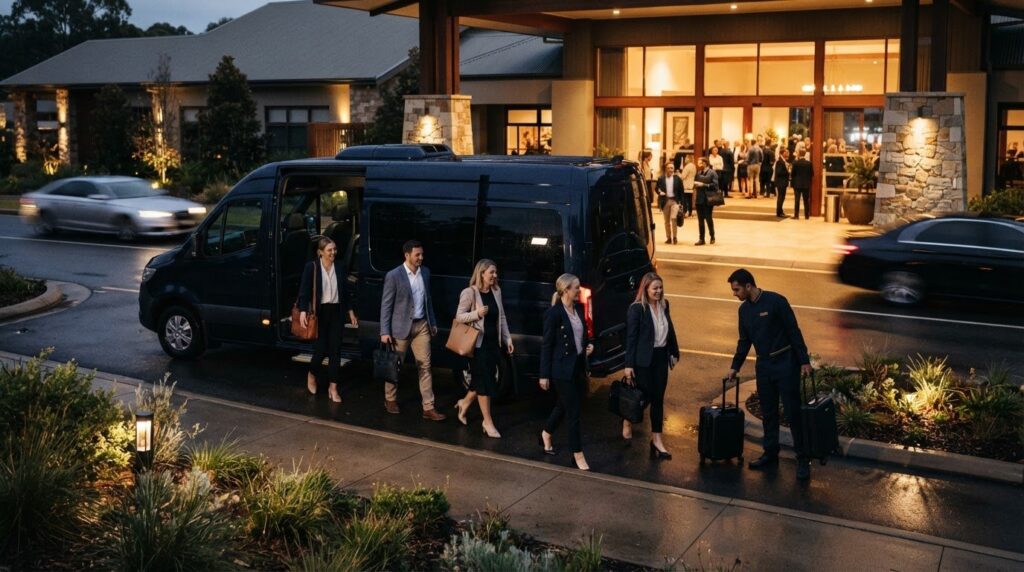
The right vehicle for a corporate event isn’t always the largest or most luxurious; it’s the one that suits the guests, schedule and occasion. Effective transport logistics for corporate events in NSW start with a movement schedule that records passenger numbers, pickup addresses and times, drop-offs, and a buffer for each journey.
It’s easy to focus on getting everyone from A to B, but transport also shapes how guests arrive and how smoothly the event runs. A polished arrival for executives may call for a different approach from group transport to a regional venue.
This guide explains how to coordinate event transport across Sydney and regional NSW, plan around run sheets and traffic, and match vehicles to your guests and occasion. You’ll also learn what details to organise, how to manage changes between pickups, and when a dedicated transport service can help keep the day on track.
Key Takeaways
- Plan pickups and drop-offs around venue access, traffic conditions and the travel demands of regional routes.
- Turn the event run sheet into a clear movement plan, with passenger details, journey buffers and named transport contacts.
- Allow for event-related road impacts early, as closures and traffic management can affect routes and timing.
- Choose transport to suit your guests’ needs and the occasion, then share your itinerary and requirements when arranging a booking.
Event transport across Sydney and regional NSW
Planning transport logistics for corporate events in NSW means aligning guest needs, venue access and timing. Plans can combine group vehicles, point-to-point transfers and scheduled pickups. Record mobility and boarding needs early so the transport arrangements suit your guests.
Venue Access and Coach Parking
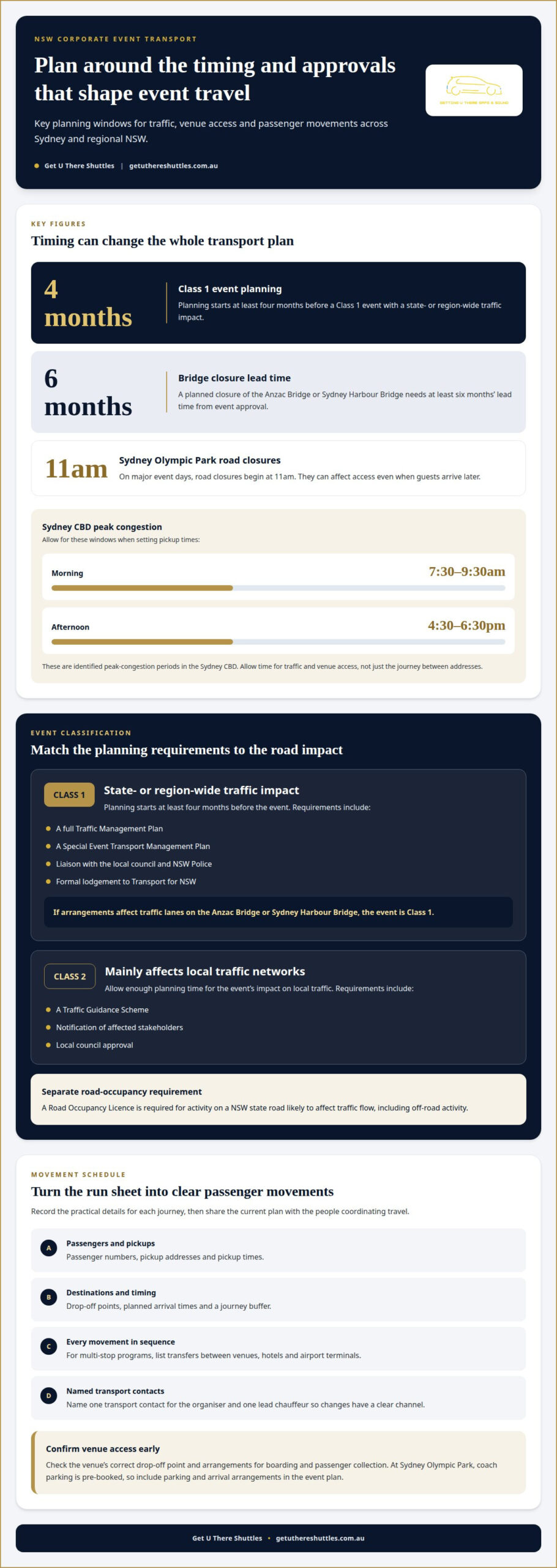
Sydney venues can have designated drop-off points and specific porte-cochère arrangements. Confirm the correct access point with the venue, including space for boarding and passenger collection. At Sydney Olympic Park, coach parking is pre-booked, so include parking and arrival arrangements in the event plan. On major event days, road closures begin at 11am, which can affect access even when guests arrive later.
Route Knowledge and Traffic
In the Sydney CBD, plan around peak congestion, identified as 7:30-9:30am and 4:30-6:30pm. Allow time for venue access and traffic when setting pickup times, rather than relying only on the journey between addresses. Regional NSW trips need a route plan that accounts for each pickup and destination, particularly when guests are travelling from different towns. Add the route and planned arrival time to the movement schedule.
Event dates can also shape transport demand. The Transport Australia NSW Annual Lunch is scheduled for Friday, 20 November 2026, from 12:00pm to 3:00pm AEDT at Crown Sydney’s Pearl Ballroom in Barangaroo. Include the venue address and session times when coordinating attendee arrivals and departures.
Sydney’s transport and fulfilment calendar includes the Importers & Exporters Networking Night (NSW), listed for Wednesday, November 25, at 4:00pm. Behind the Scenes: Warehousing Innovations is listed for Wednesday, February 17, at 5:30pm. For either event, align pickup windows with the published start time and venue location, then plan return trips around the finish.
Planning transport from the event run sheet
Start with the event run sheet, then turn each movement into a transport booking. Record passenger numbers, pickup addresses and times, and drop-off points. Allow a journey buffer, especially when Sydney street access or a regional connection could affect arrival times.
For a multi-stop program, list each movement in sequence, including transfers between venues, hotels and airport terminals. Name one transport contact for the organiser and one lead chauffeur. This gives both sides a clear channel for changes to timings or arrangements. For a multi-day conference or roadshow, keeping the same chauffeur can help provide continuity throughout the program.
Reservations work best when the itinerary includes practical details, not just the event start time. Set out when guests need to arrive, where they will board, and whether return transport follows the session or a later function. For a keynote speaker with a fixed stage time, plan a dedicated journey rather than relying on a group movement. A 9:00am stage call, for example, needs an arrival time that leaves room for venue entry and preparation.
Passenger transport licensing and vehicle safety requirements depend on the service and vehicle arranged. Keep these separate from event permits, which address impacts on roads and traffic.
For Class 1 events, which have a state- or region-wide traffic impact, planning starts at least four months before the event. Requirements include a full Traffic Management Plan, a Special Event Transport Management Plan, liaison with the local council and NSW Police, and formal lodgement to Transport for NSW. If arrangements affect traffic lanes on the Anzac Bridge or Sydney Harbour Bridge, the event is Class 1.
Class 2 events mainly affect local traffic networks. Allow enough time for planning, depending on the event’s impact on local traffic. They require a Traffic Guidance Scheme, notification of affected stakeholders and local council approval. Separately, a Road Occupancy Licence is required for activity on a NSW state road likely to affect traffic flow, including off-road activity. Build these approval steps into the run sheet before confirming street access and passenger movements.
Special-event traffic and transport management
Connect event travel arrangements to the traffic plan, then assign clear responsibilities. In NSW, the event’s impact on roads shapes the approvals and planning time required.
Special Event Transport Plans
A Special Event Transport Management Plan explains how guests, vehicles and traffic will move around the event. Set out arrival and departure routes, access points, closures, passenger communications and who manages each change. A practical template also records the event footprint and contact details, helping organisers and transport teams follow the same arrangements.
The planning timeline depends on the event’s classification and circumstances. A planned closure of the Anzac Bridge or Sydney Harbour Bridge needs at least six months’ lead time from event approval. Build these milestones into the working plan rather than leaving them until transport bookings are underway.
Delays, Cancellations and Backup Vehicles
Manage disruption with a named contact, an agreed update process and a clear decision path for revised pickup times or routes. Organisers should establish how cancellations are communicated and what contingency applies if a vehicle becomes unavailable. A backup vehicle is a planning option, not an assumption; document how it will be activated and who will notify passengers.
A dedicated event transport manager can coordinate the transport schedule with the organiser’s run sheet. They can track changes, such as a delayed session, altered pickup point or venue closure, then relay updates through the agreed contacts.
For transport planning records, keep one current list of passenger counts, pickup locations, transport contacts and vehicle movements. Date each update and share the latest version with the people coordinating travel, so outdated arrangements don’t drive decisions.
Organisers should consider relevant insurance cover, responsibility for each transport task, and how passenger needs and disruptions will be managed. Record these risk controls alongside emergency contacts and the process for reporting an incident.
Matching vehicles to guests and event tone
Choose a vehicle to match passenger needs, journey pattern and event style, not appearance alone. A formal government reception, a leadership retreat and a staff celebration may call for different arrival experiences. Start with passenger numbers, mobility needs, luggage and pickup locations, then select transport that suits the full itinerary.
Guest comfort is practical as well as visual. Consider how easily passengers can board, whether anyone needs assistance, and how much luggage or event equipment they’ll bring. Share these details when planning so the transport arrangement reflects the group’s needs, not just a general headcount.
The event’s tone helps guide the level of service. For executives arriving at a conference, a coordinated point-to-point journey arranged via private luxury services like blackgrandeurchauffeur.com can support a composed arrival. For a larger staff gathering, several planned movements may fit the schedule better. Match the vehicle presentation and pickup process to the occasion while keeping departure times and venue access workable.
- Formal conference: prioritise an orderly arrival, clear pickup instructions and direct journeys for key speakers.
- Staff event: coordinate group movements around the run sheet and the venue’s arrival window.
- Regional program: account for luggage, multiple pickup points and the distance between towns.
- Guests needing assistance: communicate individual boarding and mobility requirements before finalising arrangements.
For a mixed group, don’t assume one vehicle type will suit everyone. Separate essential movements, such as a presenter’s fixed arrival, from general attendee transport. This lets the plan reflect different priorities without making the overall schedule harder to follow.
To plan a tailored vehicle arrangement, request a transport quote with passenger numbers, pickup points, event timings, luggage details and any access requirements. These details help shape an option around your guests and the event’s tone.
Get U There Shuttles: Worker’s compensation transportation
Get U There Shuttles provides Worker’s compensation transportation for people travelling in connection with a work-related injury. To request a quote, provide the pickup and destination, travel date and time, and passenger requirements. These details help tailor the transport arrangement and provide a fixed, upfront price.
You’ll be contacted within 24 hours with a quote. If your booking is urgent or you need help completing the form, call 1300 66 88 48. Get U There Shuttles also provides NDIS transport, Airport Transfers and Cruise Ship Transfers.
Contact Get U There Shuttles to discuss your transport requirements.
Set your next event journey in motion
Include transport in the event plan from the outset. A clear brief turns your programme into practical arrangements for guests, speakers and staff, while keeping the experience aligned with the occasion. The final step in planning transport logistics for corporate events in NSW is to turn those decisions into a booking that reflects your passengers’ needs.
If attendees need travel beyond the event itself, Get U There Shuttles also offers Airport Transfers and Cruise Ship Transfers. Worker’s compensation transportation can support a separate journey related to an injury. Include the trip details and passenger requirements when you get in touch, so the discussion can focus on your needs.
Ready to discuss your arrangements? Contact Get U There Shuttles to take the next step and shape a considered journey for your guests.
Frequently Asked Questions
How do I choose between charter buses, coaches, shuttles and taxis for an NSW corporate event?
Choose transport based on passenger numbers, event timing and how guests need to travel. A coach can suit a group travelling together, while taxis may suit individual journeys. A shuttle service can work for repeated trips between set locations. Get U There Shuttles provides private point-to-point transport with fixed, upfront pricing. Share your itinerary and passenger requirements when requesting a quote.
How do I plan routes, pickup points and schedules for a corporate event in Sydney?
Use a map and the venue’s arrival instructions to choose a practical meeting point, then give guests the exact street entrance and pickup time. For example, use separate hotel collection and venue drop-off points if access differs. Decide who will communicate changes to attendees, and keep the latest directions in the event information so guests aren’t relying on outdated messages.
What transport options serve regional NSW corporate event venues and airports?
For regional NSW, plan a private transfer between the agreed pickup location, event venue and airport, if required. Get U There Shuttles offers Airport Transfers. Provide the airport, venue address, passenger details and flight information to plan the journey. For a venue away from an airport, map the pickup and destination together, including any intermediate stops the group needs.
How far in advance should I book event transport in NSW, and what information do providers need?
Arrange transport as early as your event schedule allows, particularly if road approvals or venue access arrangements are involved. To request a quote, provide the event date, passenger count, pickup and drop-off addresses, required times, trip sequence and passenger needs. Include luggage requirements and a contact person for itinerary changes. Clear details help shape a transport plan around your actual program.
Are there NSW road closures, parking restrictions or major-event traffic rules that affect corporate transport?
Yes. In NSW, organisers must give 28 days’ notice when an event requires public bus diversions, route changes or temporary bus stop closures or relocations. A Road Occupancy Licence is required for activity on a state road likely to affect traffic flow, including off-road activity. If an event affects the footways of the Anzac Bridge or Sydney Harbour Bridge, a Bridge Usage Permit is required under section 48 of the Roads Regulations 2018 (NSW).