

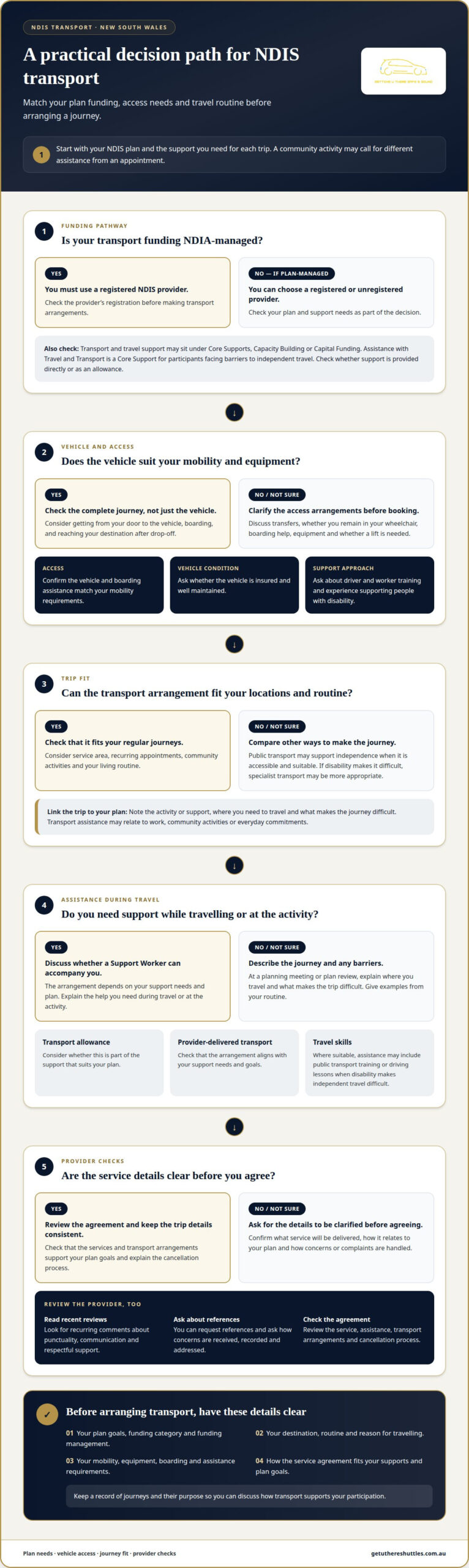
Start with your NDIS plan and support needs: transport arrangements and funding depend on both. If your funding is NDIA-managed, you must use a registered NDIS provider. With plan-managed funding, you can choose a registered or unregistered provider. Knowing how to find reliable NDIS transport providers means matching the service to your accessibility needs, travel routine and location.
It’s understandable to want more than a vehicle that gets you from A to B. Clear booking communication, suitable assistance and a respectful approach all shape how comfortable and dependable a journey feels.
This guide explains how to review your transport support, assess vehicle access for your needs and compare NDIS transport providers in New South Wales. You’ll also learn what to consider when arranging transport, so you can choose an option that fits your needs and plan.
Key Takeaways
- Review your NDIS plan and travel needs to understand which transport arrangements may suit your goals.
- Assess whether a vehicle’s access features and level of assistance match your mobility requirements.
- Consider how transport support fits your activities, routine and plan, including whether assistance during travel is needed.
- When comparing providers, consider registration requirements, service area, booking communication and how well the service suits your needs.
Getting started and reviewing transport support
Begin with your NDIS plan, travel goals and the support you need for each journey. A trip to a community activity may require different assistance from travel to an appointment.
Transport funding and support categories
NDIS transport and travel support may sit under Core Supports, Capacity Building or Capital Funding, depending on your plan. Assistance with Travel and Transport is a Core Support for participants facing barriers to independent travel. Review your plan goals and funding category, and check whether transport support is provided directly or as an allowance.
For example, consider whether you need a ride to attend social activities or help building public transport skills. A Support Worker may accompany you during travel or community activities, depending on your support needs. In NSW, a Local Area Coordinator can help connect participants with local services and supports, according to NSW Government.
Safety, insurance and vehicle accessibility
No single vehicle feature suits every participant. Consider whether the vehicle is insured, well maintained and accessible for your mobility needs. If you use a wheelchair, confirm that the vehicle has suitable access, including a lift if needed.
Ask how drivers and workers are trained and whether they have experience supporting people with disability. Respectful communication, privacy and attention to your individual needs matter throughout the journey. These checks help you assess safety and accessibility without assuming every vehicle or support arrangement is the same.
Charges, waiting time and cancellations
Your plan and service agreement help clarify what transport support can be funded and how it is arranged. Before booking, make sure the agreement explains any charges for the trip, waiting time, cancellations and worker travel. It should also explain how those items relate to your supports and plan goals.
Ask for the charging method to be explained in plain language, including what happens if an appointment runs late or plans change. This gives you a clearer basis for organising recurring trips and tracking transport expenses against your plan.
Agreements, reviews and complaints
A service agreement should describe the services provided and how funding supports your plan goals. Sydney Children’s Hospitals Network explains that an agreement can set out how funding will be used and which services will be delivered. Review the transport arrangements, assistance, charges and cancellation process before agreeing.
To assess a provider, read recent reviews for specific comments about punctuality, communication and respectful support. Look for recurring themes rather than relying on a single account. You can also request references and ask how complaints are received, recorded and addressed. A clear process tells you where to raise concerns about a booking or journey.
Wheelchair-accessible vehicles
A suitable vehicle should match your mobility needs, not simply carry a wheelchair. Consider how you transfer, whether you remain seated in your wheelchair and what assistance you need when boarding. For example, someone using a mobility device may need a wheelchair-accessible vehicle with a lift. Discuss these practical details before arranging transport.
Ask how the vehicle accommodates your wheelchair and any equipment you travel with. The provider should explain the access available and whether the vehicle suits your needs. Also consider whether the vehicle is well maintained and insured. These details help you assess whether each journey can be arranged with comfort and confidence.
Your choice should reflect more than vehicle access. Compare providers using these practical considerations:
- Accessibility: Does the vehicle and boarding assistance suit your ability and mobility equipment?
- Location: Can the service reach your home and the places you regularly attend?
- Frequency: Can bookings fit your living routine, including recurring appointments or community activities?
- Funding: Does the transport arrangement align with the supports and funding in your NDIS plan?
Public transport may support independence when it is accessible and suitable for your journey. If disability makes public transport difficult, specialist transport may be a more appropriate way to reach appointments or social activities. Consider the full journey, including getting from your door to the vehicle and from drop-off to your destination.
When coordinating multiple supports, share your travel routine and access requirements with the people arranging them. For example, a regular appointment may require consistent pick-up details and assistance. Clear arrangements help transport providers and other workers plan around your needs without disrupting the rest of your day.
If you’re arranging NDIS transport, explore NDIS transport support as part of planning a journey that suits your requirements.
NDIS travel and transport assistance
Start by linking each journey to an activity or support in your NDIS plan. Transport assistance may help you access work, community activities or everyday commitments when disability makes public transport difficult. The relevant support depends on your plan, needs and goals. Keep a record of journeys and their purpose so you can discuss how transport supports your participation.
At an initial planning meeting or plan review, explain where you need to travel and what makes the journey difficult. Give examples, such as reaching a community activity independently or travelling regularly for work or study. Assistance may include a transport allowance, provider-delivered transport or, where suitable, training to use public transport. Driving lessons may also be supported when disability makes independent travel difficult.
Transport support may involve a Support Worker accompanying you, depending on your needs and plan. For example, a worker may travel with you to a community activity and assist while you take part. Discuss whether you need assistance during the journey, at the destination or both. Make this clear when arranging support, so the planned assistance reflects the activity.
For general transport arrangements, registration group 0108 is Assistance with Travel/Transport Arrangements. Support item 01_001_0107_1_1 covers transport for participants to access daily activities. These identifiers can help you discuss the type of assistance in your plan. Funding may also support public transport fares when trips relate directly to your NDIS goals.
Medical travel needs careful consideration: the NDIS generally doesn’t fund transport to medical appointments, although disability-specific support to attend may be funded under your plan. If taxis are part of your travel arrangements, eligible participants may also qualify for a state or territory taxi subsidy scheme. Consider the purpose of each journey, your support needs and how the arrangement connects with your plan goals.
Finding NDIS-approved transport providers
Finding a nearby provider means checking both service coverage and funding requirements. Knowing how to find reliable NDIS transport providers starts with matching those details to your regular journeys and support needs.
Finding providers near you
Use the NDIS Provider Finder to search for transport providers in your area, or contact your Local Area Coordinator for help connecting with local supports. Filter your options by the places you travel, such as appointments, medical services or social activities. Local coverage matters when you need transport between specific suburbs or destinations.
Compare the practical arrangements for the journey you make most often. For example, ask how bookings work for a recurring appointment, how schedule changes are communicated and whether the service can accommodate your mobility needs. A nearby provider may not be the right fit if its service area or assistance doesn’t suit your routine.
Checking NDIS provider approval
NDIS registration requirements depend on how your funding is managed. Participants with NDIA-managed funding must use registered providers. Participants whose plans are managed by a plan manager can choose registered or unregistered providers. Knowing your funding management type helps narrow your options before arranging regular transport.
Use the NDIS Provider Finder to review registration details and listed supports. Registration alone doesn’t establish whether a provider’s transport suits your journey, so consider its service area, booking arrangements and the assistance you need. To find reliable NDIS transport providers for your circumstances, compare each option against the same trip and support requirements.
Ask how drivers or workers communicate about pick-ups and changes, and how they support participants during travel. These details help you judge whether the service can fit your appointments and routine. To discuss a transport arrangement, contact Get U There Shuttles.
Get U There Shuttles: Worker’s compensation transportation
Get U There Shuttles provides Worker’s compensation transportation and NDIS transport in New South Wales, with private point-to-point journeys tailored to individual needs. If you’re comparing NDIS transport options, share your pick-up and destination details, travel requirements and any assistance needed during the journey. This helps clarify the transport arrangement you’re looking for.
For a worker’s compensation journey, provide the relevant trip details when discussing transport. For NDIS travel, consider how the journey connects with your plan and support needs. Get U There Shuttles also provides Airport Transfers and Cruise Ship Transfers for those travel requirements.
Contact Get U There Shuttles to discuss your transport needs and arrange a journey that fits your requirements.
Plan your next journey with confidence
A useful next step in deciding how to find reliable NDIS transport providers is to write down what a successful journey looks like for you. Note your preferred pick-up arrangements, any assistance you need along the way and what helps you feel comfortable. This gives you a clear starting point for discussing a transport booking that fits your routine.
Keep those details together and update them when your travel needs change. A regular appointment, a new destination or a change in mobility support may affect how you want a journey arranged. Clear information helps make conversations about transport more focused and personal.
Get U There Shuttles offers Worker’s compensation transportation, Airport Transfers and Cruise Ship Transfers, alongside NDIS transport. If you’d like to discuss your requirements, contact Get U There Shuttles. A thoughtful plan can make the next step feel more manageable.
Frequently Asked Questions
How do I choose between NDIS transport providers?
Choose the provider whose transport arrangements best fit your support needs and regular journeys. For example, compare how each handles a changed appointment time, communicates pick-up arrangements and accommodates your mobility requirements. Consider whether the same booking process works for recurring trips and occasional travel. A clear service agreement and practical answers about your routine can help you make a considered choice.
Do I Have to Use a Registered Provider?
That depends on how your NDIS funding is managed. If your funding is NDIA-managed, you must use a registered NDIS provider. If you’re plan-managed, you can choose a registered or unregistered provider. Before arranging recurring travel, identify who manages your plan and use that to guide your provider choice.
How to check whether an NDIS transport provider is registered and verified?
Use the NDIS Provider Finder to look for a provider’s registration details and listed supports. Check that the transport support shown is relevant to the service you need, rather than relying on a business name or general description alone. You can also contact your Local Area Coordinator for help connecting with local services. Registration status and suitability for your specific journey are separate considerations.
What qualifications, checks and training should NDIS transport workers have?
Look for workers who are trained, respectful and experienced in supporting people with disability. Ask how their experience relates to your needs, such as communicating clearly during a journey or assisting with your routine. You can also ask how staff protect your privacy when handling personal travel details. Focus on the support you need rather than assuming one qualification alone establishes suitability.
How to compare NDIS transport providers by reliability, accessibility and service area?
Compare providers using the same journey details: your pick-up area, destination, travel frequency and assistance needs. For example, ask how a provider communicates a schedule change and whether its service area covers both ends of a regular trip. Consider vehicle access alongside booking arrangements, so the option suits your mobility needs and routine, not simply its distance from home.
How are NDIS transport supports funded, and what are the current price limits?
Transport funding depends on your NDIS plan, goals and support item. The applicable price limit relates to the support being delivered, so a single figure cannot describe every transport arrangement. Check the relevant item and current NDIS pricing arrangements against your plan. Your service agreement should also explain the provider’s charges and how the agreed transport support relates to your funding.