
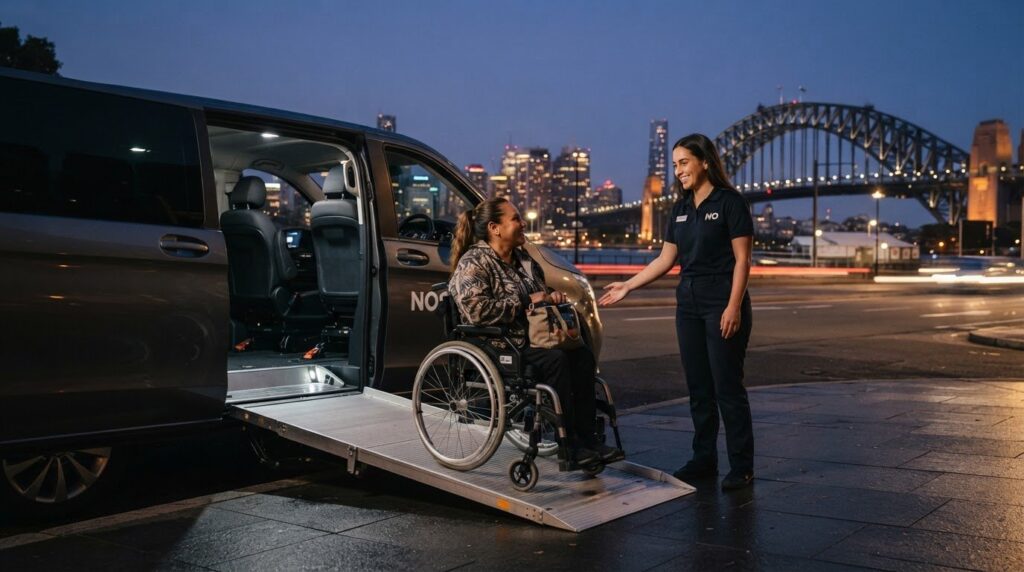
For NDIS participants in NSW, transport planning starts with the journey and the support needed to make it. The NDIS transport booking process in NSW means considering how a trip fits the participant’s plan, then arranging transport and sharing practical details such as the destination, timing and mobility needs. Transport funding can be applied for during an NDIS planning meeting.
Getting to a medical appointment or running an errand can involve more than travelling between addresses. A participant may need help getting to and from the vehicle, attending an appointment or carrying out an everyday activity.
This guide explains how to organise transport, what information to provide for a booking or referral, and how funding responsibilities relate to the trip. It also covers planning journeys around appointments, errands and personal goals, so the next steps are clearer and more manageable.
Key Takeaways
- Start by identifying the journey’s purpose and the assistance you need, then consider how the trip supports your daily activities and goals.
- Prepare the key booking details, including your destination, timing and mobility requirements, to make arranging transport clearer.
- Understand how your NDIS plan relates to transport and which responsibilities need to be considered before a journey is arranged.
- Explore how taxis, rideshare, community transport and public transport may fit different travel needs and circumstances.
Arranging transport around daily needs and goals
Start with the purpose of each journey, such as a medical appointment, shopping trip or community activity. Then identify what assistance will make it manageable. The participant’s plan guides the support needed before, during and after travel. For example, support may include getting ready to leave, attending an appointment or communicating with others. Clear goals connect transport arrangements with everyday routines and community participation.
For regular routes, plan the whole journey, not just the vehicle trip. Consider how the participant will reach the stop, board, travel, get off and reach the destination. Route planning, travel-card use and boarding routines can help build public transport skills. Practising a route gradually can help a participant become familiar with each stage. For example, a planned trip to a local shop can include practising where to wait and how to board.
- List the destination and purpose, such as a clinic visit or grocery shopping.
- Note assistance needed with mobility, communication or attending an appointment.
- Map each stage, from leaving home to reaching the destination and returning.
- For public transport, consider route planning, travel-card use and boarding practice.
Needs can change, so review arrangements when support starts and whenever circumstances change. A new appointment location, different mobility needs or a change in routine may affect the journey plan. Update the practical details and support required, then consider whether the current travel approach still fits the participant’s goals. This keeps arrangements relevant to current activities rather than tied to an outdated routine.
In NSW, people aged 65 years and over can contact My Aged Care for a community transport eligibility assessment. Aboriginal and Torres Strait Islander people aged 50 years and over can also contact My Aged Care for an assessment. The NSW regional Community Transport trial is scheduled to run until 30 June 2027. It supports eligible transport-disadvantaged people travelling to face-to-face study at TAFE NSW or a Registered Training Organisation, or to work as an apprentice or trainee. Applicants must have limited or no access to private or public transport, not already receive government-funded transport, and need transport for one of those purposes.
Booking and referral process
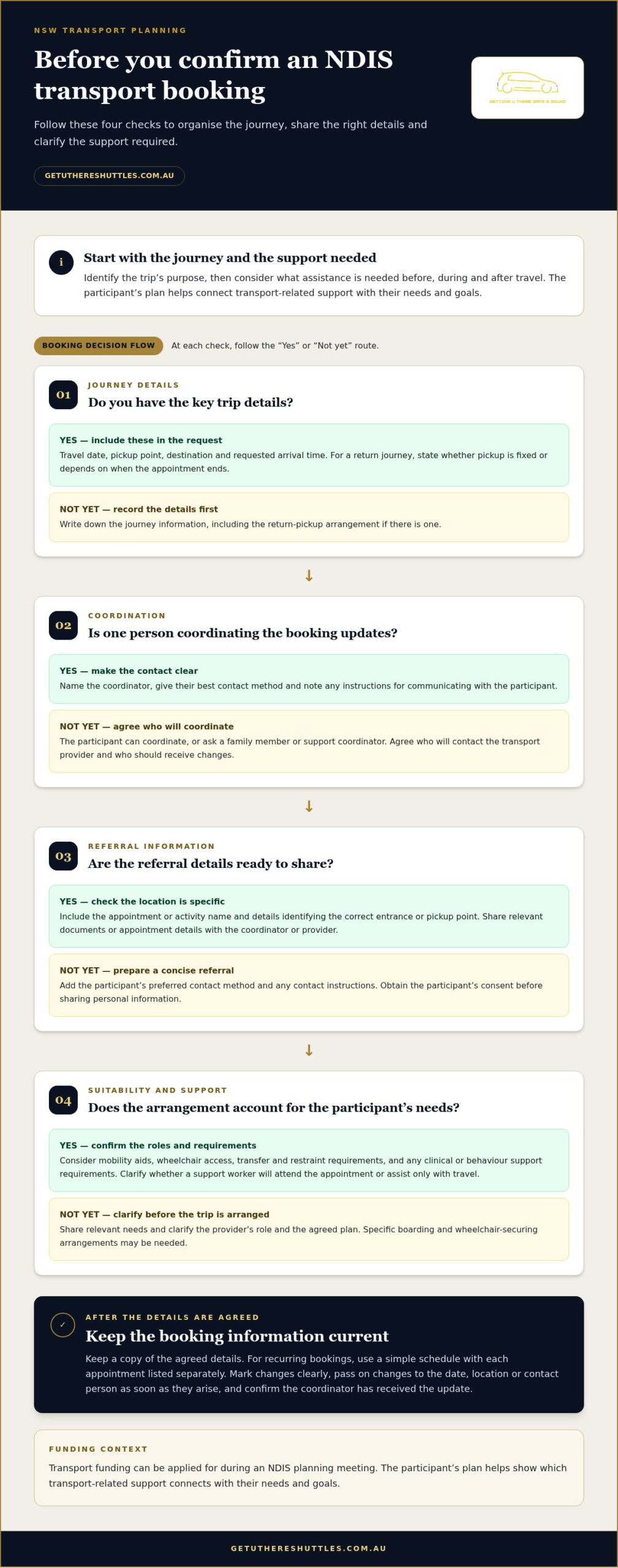
The NDIS transport booking process in NSW is easier to manage when one person coordinates updates. The participant can do this or ask a family member or support coordinator. Agree who will contact the transport provider and who should receive changes. If a referral is involved, make the handover clear: identify the main contact and give them the details needed to manage the request.
Prepare a concise referral with the participant’s preferred contact method and any instructions for contacting them. Include the appointment or activity name, plus details that identify the correct entrance or pickup point. At a large medical centre, for example, specify the building or entrance listed in the appointment information. This helps avoid confusion between nearby pickup locations.
- Prepare the request. Record the travel date, pickup point, destination and requested arrival time. For a return journey, state whether the pickup time is fixed or depends on the appointment ending.
- Explain the arrangement. Name the person coordinating the booking and the best way to reach them. Note any instructions for communicating with the participant.
- Send the referral. Share relevant documents or appointment details with the coordinator or provider. Obtain the participant’s consent before sharing personal information.
- Track changes. Keep a copy of the agreed details. Pass on changes to the date, location or contact person as soon as they arise.
For recurring NDIS transport bookings in NSW, use a simple schedule that shows each appointment separately. Mark changes clearly, rather than relying on a previous message or memory. This is useful if a specialist visit moves to another clinic or a regular appointment is rescheduled. Confirm that the person coordinating the booking has received the updated details. If you need help discussing a transport request, discussing transport arrangements is a practical next step.
Funding, provider responsibilities and suitability
A participant can apply for NDIS transport funding during their planning meeting. Their plan helps show which transport-related support connects with their needs and goals. Before arranging a trip, clarify who will organise transport, provide assistance and communicate changes. For example, agree whether a support worker will attend the appointment or assist only with travel. Clear roles help prevent gaps between the journey and support at the destination.
Transport options in NSW differ in how trips are arranged and what assistance they provide. Community transport may offer door-to-door trips, flexible pickups, driver assistance and help carrying shopping. Accessible taxis are another option when a suitable vehicle meets the passenger’s needs. Compare options against the route, mobility requirements and level of assistance needed.
Suitability depends on more than the destination. Consider the participant’s mobility aids, wheelchair access, transfer needs, restraint requirements and any clinical or behaviour support requirements. The provider also needs to understand its role and the agreed plan. For example, a wheelchair user may need specific arrangements for boarding and securing the chair. Share relevant details before the trip so the transport plan can account for them.
Wheelchair-accessible transport depends on the participant’s wheelchair, restraint and transfer requirements, a suitable vehicle and the agreed booking. These factors determine whether a particular vehicle and journey arrangement are suitable. Explain how the participant boards, travels and exits rather than simply requesting an accessible vehicle. This gives the booking useful practical detail.
If booked transport is late, cancelled or feels unsafe, contact the provider and the person coordinating the participant’s support. If safety is in question, don’t begin or continue the journey. Explain the concern and arrange a safer next step. Record what happened, including the agreed pickup time and any messages, and share the account with the coordinator. Review the plan before the next trip: recurring issues may mean the provider’s role, vehicle or support arrangements need reassessment.
Can NDIS transport funding be used for taxis, rideshare, community transport, or public transport?
Whether transport funding applies depends on the participant’s plan and the journey’s purpose. Don’t assume a taxi, rideshare trip or public transport fare is automatically covered. Relate the trip to the participant’s transport needs and goals, then discuss the funding arrangement with the person managing the plan. During planning, describe the journeys required and the assistance that makes them possible.
Each option suits different travel needs. A taxi or rideshare may provide direct travel between addresses, while public transport may suit a familiar route with manageable boarding and transfers. Consider the participant’s mobility, route, appointment timing and assistance needed at either end. A journey involving several transfers, for example, may need a different plan from a direct trip to a regular appointment.
In NSW, community transport may offer door-to-door trips, flexible pickup times, wheelchair-suitable vehicles, driver assistance and help carrying shopping. Services and fares vary between operators and areas, so contact the local community transport operator for fare and booking details. Match the service to the participant’s access needs, journey purpose and required assistance.
- Taxi or rideshare: Consider whether direct travel meets the participant’s access and support needs.
- Public transport: Review the route, boarding steps, transfers and assistance required.
- Community transport: Ask the local operator about available trip arrangements, fares and booking.
Keep a record of the chosen mode, trip purpose and how it relates to the participant’s plan. If a regular clinic visit changes location, reassess the route and the transport arrangement rather than assuming the previous option still fits. This makes funding conversations and future bookings more specific. To discuss a journey that needs individual transport arrangements, request help planning your transport.
Get U There Shuttles: Airport Transfers
Get U There Shuttles provides NDIS transport for medical appointments and Airport Transfers across Sydney and NSW. To request a quote, provide the pickup and destination addresses, travel date and times, and any mobility or assistance requirements. For airport travel, include relevant flight information so pickup arrangements can be personalised.
Complete your details in the booking form, and Get U There Shuttles will be in touch within 24 hours with a quote. If your booking is urgent or you need help completing the form, call 1300 66 88 48. Contact Get U There Shuttles to discuss the journey and your transport requirements.
Make your next journey easier to plan
Choose a journey that matters to the participant’s routine and use it to plan a practical next step. The NDIS transport booking process in NSW should reflect the participant’s goals and preferences, not just the destination. Involving the participant helps ensure arrangements support the activities they want to reach and the assistance they need. As plans evolve, consider each journey’s purpose rather than assuming one arrangement suits every trip.
Get U There Shuttles provides NDIS transport, Airport Transfers, Cruise Ship Transfers and worker’s compensation transportation across Sydney and NSW. If you’re arranging transport for a participant, share the journey details and support needs when making an enquiry. For airport, cruise or work-related travel, describe the trip so the request can be directed appropriately.
Contact Get U There Shuttles to discuss your transport requirements and take the next step with confidence.
Frequently Asked Questions
What Are NDIS Transport Services?
NDIS transport services help participants travel to activities linked to their daily needs and goals. Holistic Care NSW says support may include appointment attendance, shopping, communication and community participation, according to the participant’s plan. Transport may involve a vehicle journey, help with travel routines or assistance around a destination. For example, a participant may need support reaching an appointment and communicating there.
Can you provide wheelchair-accessible transport?
Wheelchair-accessible transport depends on the wheelchair, restraint and transfer requirements, a suitable vehicle and the agreed booking. Describe how the passenger boards, travels and exits, and share details about their mobility equipment. This helps determine whether the arrangement suits the journey. Don’t assume every vehicle accommodates every wheelchair: suitability depends on the participant’s equipment and support needs.
How do I book recurring transport?
For recurring journeys, prepare a schedule with each travel date, pickup address, destination and appointment time. Note whether a return trip is needed and whether details vary between visits. A regular clinic appointment, for example, may have the same pickup location but different return arrangements. Share the schedule with the person coordinating transport and update them if the appointment or support needs change.
How does NDIS transport funding work in NSW?
NDIS transport funding is considered in relation to the participant’s needs and plan. A participant can apply for transport funding during their planning meeting. Before arranging a journey, identify its purpose and the support required, then relate those needs to the plan. For instance, explain how transport enables attendance at an appointment or participation in a community activity.
How do I check whether my NDIS plan includes transport funding?
Review the participant’s current plan for information about transport funding and the support it is intended to cover. If the wording is unclear, note the journey and support need, then discuss how they relate to the plan with the person assisting with planning. For example, distinguish the trip to an appointment from support needed after arrival.
How do NDIS participants book transport in NSW?
To book, choose the journey and gather the participant’s pickup address, destination, travel date, appointment time and return requirements. Include relevant mobility, communication or assistance needs. The participant, a family member or a support coordinator can organise the request. For a referral, explain who will coordinate updates and provide the participant’s consent where appropriate. Keep the agreed details handy so changes can be communicated clearly.