

Non-emergency patient transport on the Central Coast is for medically stable people who need assistance travelling to or from healthcare facilities. It supports planned journeys rather than urgent emergencies. In NSW, call Triple Zero (000) if an emergency ambulance is needed for a life-threatening or urgent situation, according to NSW Ambulance.
A scheduled appointment can still involve mobility needs, careful timing or help getting to and from a vehicle. Understanding what support is needed makes it easier to plan suitable non-emergency patient transport on the Central Coast.
This guide explains what non-emergency patient transport may involve, how government assistance differs from self-funded travel, and what details can affect a booking. It also covers practical considerations for comfort and planning a medical journey.
Key Takeaways
- Non-emergency transport is for medically stable people who need help travelling to or from healthcare, rather than urgent emergency care.
- Match the transport and support to the passenger’s mobility, medical needs and ability to travel independently.
- Explore relevant assistance options, including IPTAAS for eligible long-distance specialist care, NDIS supports or aged care packages.
- Journey details and support requirements affect transport arrangements; have the appointment, pickup and mobility information ready when requesting a quote.
- For medical appointment transfers on the Central Coast, Get U There Shuttles can tailor transport to the passenger’s requirements.
What is non-emergency patient transport?
Non-emergency patient transport is for medically stable people who need help travelling to or from healthcare facilities. On the Central Coast, planned journeys may include hospital transfers, admissions, discharges and medical appointments.
If a patient’s condition becomes urgent, call Triple Zero (000) for a life-threatening or urgent situation, according to NSW Ambulance. Don’t continue with a routine booking when immediate emergency care is needed.
Transfers between health facilities
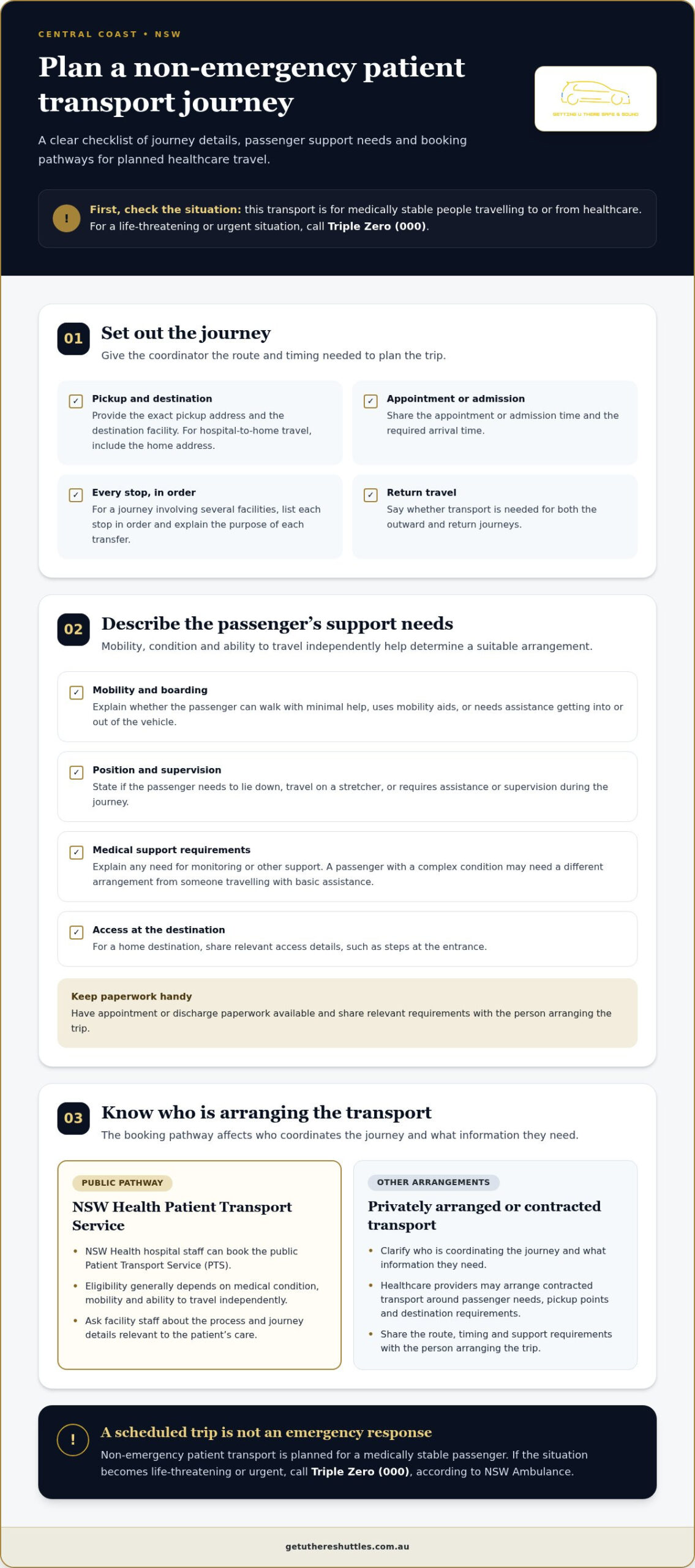
A transfer between facilities moves a patient from one healthcare setting to another, such as a hospital to a rehabilitation facility. Inter-hospital transfers connect hospitals when care is needed at a different location. Before arranging travel, identify the pickup and receiving facilities, the required arrival time and the patient’s mobility needs.
These details help determine the appropriate vehicle and support. An ambulatory patient who can walk with minimal help has different needs from someone who must travel lying down on a stretcher. Explain whether the passenger needs assistance getting into or out of the vehicle, so the journey can be planned accordingly.
Hospital, home and appointment transfers
Hospital admissions and discharges involve travel to hospital for planned care or from hospital to a home address after discharge. Medical appointment transfers cover scheduled visits to clinics and other healthcare facilities. Provide the pickup location, destination and appointment time, and explain whether the passenger needs help entering or leaving the vehicle.
For a hospital-to-home journey, provide the home address and relevant access details, such as steps at the entrance. A passenger attending an appointment may need transport for both the outward and return journeys. Clear information helps coordinate each trip with the facility’s schedule and the passenger’s mobility.
Non-emergency transport is different from an emergency ambulance response. It is for scheduled journeys when the passenger is medically stable but may need assistance or supervision. The support required depends on the person’s condition, mobility and ability to travel independently. Someone who can walk with minimal support may need a different arrangement from a passenger requiring stretcher transport.
Before arranging non-emergency patient transport on the Central Coast, prepare the appointment or admission details, both addresses and a clear description of the passenger’s needs. Include mobility aids, help with boarding and whether the passenger needs to lie down. These details help identify a suitable vehicle and support for the planned journey.
Non-emergency patient transport services
Non-emergency patient transport can support planned healthcare journeys when a person is medically stable but needs assistance or supervision. The right arrangement depends on the passenger’s mobility, condition and travel needs.
To arrange transport, prepare the pickup and destination addresses, appointment or admission time, and a clear description of the passenger’s mobility and support needs. Keep any appointment or discharge paperwork available and share relevant requirements when booking.
In NSW, NSW Health hospital staff can book the public Patient Transport Service (PTS). Eligibility for non-emergency transport generally depends on a patient’s medical condition, mobility and ability to travel independently. The patient must be medically stable but may need assistance or supervision during the journey.
This public booking pathway differs from privately arranged transport. A healthcare facility may coordinate a patient’s journey, including a transfer to another facility. Facility staff can explain the process and share journey details relevant to the patient’s care. For contracted transport, healthcare providers arrange travel around passenger needs, pickup points and destination requirements.
The required level of clinical support matters, too. A patient who can travel with basic assistance has different needs from someone with a complex condition. High-acuity transport can provide additional monitoring and trained staff, even when the journey is not an emergency. Explain any need for monitoring, help boarding or stretcher transport to the person arranging the trip.
Regulatory guidance and booking processes depend on the transport pathway. For a NSW Health PTS booking, the hospital’s staff arrange the service. For other non-emergency transport, clarify who is coordinating the journey and what information they need. The distinction helps avoid treating a scheduled transport request as an emergency response. If a situation becomes life-threatening or urgent, call Triple Zero (000).
Plan the pickup location and timing carefully. Provide the exact address, destination facility and required arrival time, and allow enough time for collection. Check the appointment or admission details against the facility’s receiving arrangements. For journeys involving several facilities, list each stop in order and explain the purpose of each transfer.
Passengers using disability-related supports can also review NDIS transport arrangements as part of planning a suitable trip. Clear details about the passenger, journey and support required help the transport coordinator organise the booking around the healthcare appointment.
Government and self-funded transport options
Funding for a planned medical journey may come through a state program, an eligible support package or private payment. In Australia, transport assistance may be available through the National Disability Insurance Scheme (NDIS), aged care packages, state-funded programs or self-funded arrangements. The relevant pathway depends on the journey’s purpose, the passenger’s circumstances and the support available.
For specialist treatment involving long-distance travel, the Isolated Patients Travel and Accommodation Assistance Scheme (IPTAAS) provides financial support. Consider whether the journey is for specialist care and involves substantial travel from home. Keep appointment and travel details together when exploring assistance. IPTAAS is a pathway for long-distance specialist care, not a general transport booking for every local appointment.
NDIS or aged care package support may be relevant when transport relates to a person’s disability or care needs. Review the passenger’s existing plan or package and note the journey’s purpose, pickup point and destination. Someone travelling to a medical appointment may need help beyond getting from one address to another. Describe any assistance required, such as support between the home entrance and vehicle, so the funding arrangement can be matched to the trip.
Mobility needs also shape the practical transport choice. A passenger who walks with minimal support may travel seated, while someone who needs to lie down may require stretcher transport. Mention any wheelchair, mobility aid or assistance with boarding when arranging the journey. These details help determine an appropriate vehicle and level of support for the passenger’s needs.
Road transport is generally practical for journeys between nearby homes and healthcare facilities. Aeromedical transport may be considered when distance, access or clinical requirements make road travel unsuitable. The treating team can describe the clinical need and destination, while the transport coordinator can use those details to plan the journey. Paramedics and other qualified clinical staff are relevant when a passenger needs clinical care or monitoring during travel.
For a self-funded booking, request a quote using the journey details and support needs, then compare the proposed arrangements with the passenger’s mobility requirements. For government- or package-funded travel, identify the relevant program and the information its process requires. Keep the appointment details, addresses, mobility information and funding pathway together to help coordinate an appropriate trip.
Non-emergency medical transport costs
Before arranging a medical journey, identify who will organise and fund the transport. Depending on the circumstances, this may be the passenger, a healthcare facility, an insurer or an assistance program. Clarifying responsibility early can prevent delays between scheduling the appointment and arranging transport.
For a privately arranged trip, decide who will coordinate the booking and keep the journey information together. A family member might manage arrangements for a passenger, while a facility may coordinate travel for a transfer. Ensure the organiser can communicate any changes to the appointment or pickup plan.
If an assistance program may apply, identify the program relevant to the passenger’s circumstances and journey. Specialist treatment involving long-distance travel may relate to IPTAAS. Disability-related travel may involve NDIS supports, while aged care packages may be relevant for some older people. Each pathway has its own eligibility considerations, so keep the program contact and journey details accessible.
For a workers’ compensation journey, identify who is handling transport within the claim process. Keep the claim contact, appointment information and travel dates together. If the treatment location changes, give the updated details to the person coordinating the journey. This keeps the transport plan aligned with the current treatment arrangements.
A practical preparation list can help keep the arrangements clear:
- Identify the person or organisation responsible for arranging transport.
- Record the journey purpose and the relevant appointment or treatment details.
- Note which assistance pathway is being considered and its contact point.
- Keep correspondence and updates in one place for the passenger or carer.
For a hospital-arranged journey, ask the facility who is coordinating transport and what information they need from the passenger or carer. For a program-supported trip, follow the program’s process to understand how the journey fits its assistance criteria. This helps distinguish a supported trip from one requiring separate private arrangements.
Schedules can change. If an appointment moves or treatment is redirected to another facility, update the relevant coordinator and the person arranging the journey. Keeping the passenger, carer, facility and funding contact informed helps everyone work from the same travel plan.
Safety, comfort and vehicle maintenance
A suitable vehicle and support plan should reflect the passenger’s mobility, treatment needs and journey. Before booking, describe how the person moves from a bed or chair, whether they use a wheelchair and what help they need to board. This information helps determine whether seated travel or a stretcher arrangement is appropriate.
For a wheelchair user, ask how boarding and securement will be handled. Accessible patient transport vehicles may use ramps or lifts and securement systems to support boarding and stability during travel. Tell the coordinator the wheelchair type and any assistance needed during transfers. A passenger who cannot safely transfer out of their chair may need a different arrangement from someone who can walk with support.
Comfort also depends on the passenger’s position and the purpose of the journey. Someone returning home after treatment may need a calm, direct trip, while a person attending an appointment may need help at both ends. Explain whether the passenger can sit upright, needs to lie down or needs support entering and leaving the vehicle. Accurate details help the transport team plan for the individual, not just the destination.
Some passengers need monitoring or help transferring into a vehicle. In these situations, a taxi or private car may not provide the required support. High-acuity transport can include additional monitoring and trained staff for complex health conditions, even when the journey is not an emergency. Describe any clinical needs clearly so the transport arrangement reflects the passenger’s circumstances.
Vehicle condition matters throughout the journey. A clean, presentable interior supports comfort, while suitable equipment is essential to the planned arrangement. Before travelling, check that mobility aids can come along and that the pickup point allows access. At collection, tell the driver about any change in the passenger’s condition or mobility since booking.
Use this preparation list before a medical journey:
- Describe mobility, wheelchair use and transfer assistance needs.
- Explain whether the passenger can sit upright or needs stretcher transport.
- Share relevant treatment or monitoring requirements with the coordinator.
- Identify access issues at both the pickup address and destination.
These steps help distinguish scheduled transport from an emergency ambulance response. If the passenger’s condition becomes urgent or life-threatening, call Triple Zero (000), as NSW Ambulance advises. A routine booking isn’t a substitute for urgent clinical care.
For a medical appointment journey, request a transport quote with the passenger’s mobility and assistance needs included. Clear information helps tailor the arrangements to the trip.
Get U There Shuttles: Airport Transfers
Get U There Shuttles provides medical appointment transfers for planned journeys to and from healthcare appointments in Sydney and beyond. To request a quote, provide the pickup and destination addresses, appointment time, passenger mobility needs and any assistance required. This information helps plan the transport around the journey.
Please complete your details using the contact form, and Get U There Shuttles will be in touch within 24 hours with a quote. For an urgent booking or help completing the form, call 1300 66 88 48.
Get U There Shuttles also provides Airport Transfers and Cruise Ship Transfers for travel connected with flights or cruise departures, as well as Worker’s compensation transportation for journeys related to a compensation claim. Contact Get U There Shuttles to discuss your planned transport needs.
Plan the next journey with confidence
For non-emergency patient transport on the Central Coast, agree on a clear plan with the passenger and anyone supporting them. Decide who will coordinate updates, who will meet the passenger at the destination and how changes to the day’s schedule will be communicated.
Having those practical details settled can make it easier to organise a journey that fits the passenger’s circumstances. If you’re arranging transport, share the relevant requirements through the contact page.
Preparation helps everyone approach the trip with greater clarity. Start with the passenger’s needs, then coordinate the arrangements around them.
Frequently Asked Questions
Can a family member or carer travel with the passenger?
Include a family member or carer’s role in the transport plan before the journey. Explain whether they provide personal assistance, communicate the passenger’s needs or help at the destination. For example, a carer may accompany someone who needs support entering a clinic. Give the coordinator the accompanying person’s details and include them in the booking arrangements.
Does insurance cover medical transport services?
Insurance cover depends on the policy terms and the reason for travel. For a workers’ compensation claim, ask the insurer or claims manager whether the specific journey is covered and what approval or documentation is required. Keep appointment records and transport receipts together. For other policies, review the wording on medical transport, exclusions and claims before relying on cover to fund a journey.
How Is NEPT Different From Emergency Ambulance Services?
NEPT is planned transport for medically stable patients, while emergency ambulance services respond to urgent incidents needing immediate clinical intervention. A scheduled trip to a facility is different from sudden severe symptoms during the day. If the situation becomes life-threatening or urgent in NSW, call Triple Zero (000), according to NSW Ambulance. Don’t treat a routine transport booking as a substitute for emergency care.
How far in advance should I book medical transport?
Arrange transport as soon as the appointment or discharge plan is known. Early planning gives time to share the correct pickup point, destination, appointment schedule and mobility requirements. For hospital discharge, coordinate the proposed collection time with the facility, as timing can change. If the appointment moves, promptly share the revised details so the transport plan reflects the new schedule.
What safety measures are in place for medical transport?
Safety planning starts with matching the transport arrangement to the passenger’s mobility and support needs. Tell the coordinator if the passenger uses a wheelchair, needs help transferring or must travel lying down. Wheelchair-accessible vehicles may use ramps or lifts and securement systems to support boarding and stability. Share any changes in the passenger’s condition before pickup so the planned assistance reflects their current needs.
What non-emergency patient transport services are available on the Central Coast NSW?
On the Central Coast, planned transport needs may include medical appointment trips, NDIS transport and travel related to workers’ compensation. These are distinct from an emergency ambulance response. For a clinic appointment, provide the facility name and required arrival time. If the journey relates to disability support or a compensation claim, explain this when arranging transport, as it may shape the booking process.
Which Central Coast areas and suburbs do patient transport providers cover?
Coverage depends on the service and the journey’s pickup and destination points. For a Central Coast trip, provide both suburb names and the healthcare facility’s full address, rather than naming the region alone. Include any intermediate facility or return leg. This gives the transport coordinator a clear picture of the requested route and helps organise the journey around the passenger’s appointment or transfer.
Who is eligible for non-emergency patient transport in NSW?
Eligibility for non-emergency transport generally reflects a patient’s medical condition, mobility and ability to travel independently. The patient must be medically stable but may require assistance or supervision en route. NSW Health hospital staff can book the public Patient Transport Service. Clearly describe any need for help boarding or travelling independently when arranging transport.